QQI LEVEL 6
Advanced Photography
Course Details
QQI Level 6
Full-time (10.00 - 16.30, Mon. - Thurs.)
Places: 20
Start Date: 14/09/2026
Finish Date: 15/05/2027
Deposit/Registration Fee: €50
Interview Required

Summary
Are you ready to take your photographic practice to the next level? Launching in Autumn 2026*, our new QQI Level 6 Advanced Certificate in Photography is designed for those who have already established a foundation in photography and wish to refine their creative vision, technical expertise, and professional practice, with a special emphasis on traditional analogue techniques and immersive darkroom work.
Delivered by Gorey School of Art, this dynamic, intensive one-year programme will equip you with the advanced skills necessary to pursue a career in the photographic industry or progress to Higher Education.
*Subject to Validation
-
Title: Photography
Code: 6M3732
Level: 6
Type: Major
-
This Level 6 programme is tailored for passionate image-makers looking to transition from enthusiasts to emerging professionals. Through a blend of practical studio work, location shooting, traditional darkroom processing, and critical analysis, students will develop a distinct visual language.
You will gain hands-on experience with industry-standard equipment, specialist film cameras, advanced lighting techniques, and both analogue darkroom printing and sophisticated digital post-production workflows. A core focus of the programme is the development of a comprehensive, professional-standard portfolio that showcases your unique artistic identity and mastery of both digital and darkroom mediums.This course provides an in-depth experience with digital video cameras, Digital SLR cameras and sound recording equipment. Moreover it covers photography editing software to reach a professional standard for video editing with knowledge of sound design techniques to complete and enhance their final documentaries.
Students also acquire aesthetic film theory knowledge along with documentary ethics which can be applied practically when needed. In addition to that they develop the ability to work both independently or collaboratively in a high pressure creative environment under tight deadlines while maintaining quality standards throughout their projects.
-
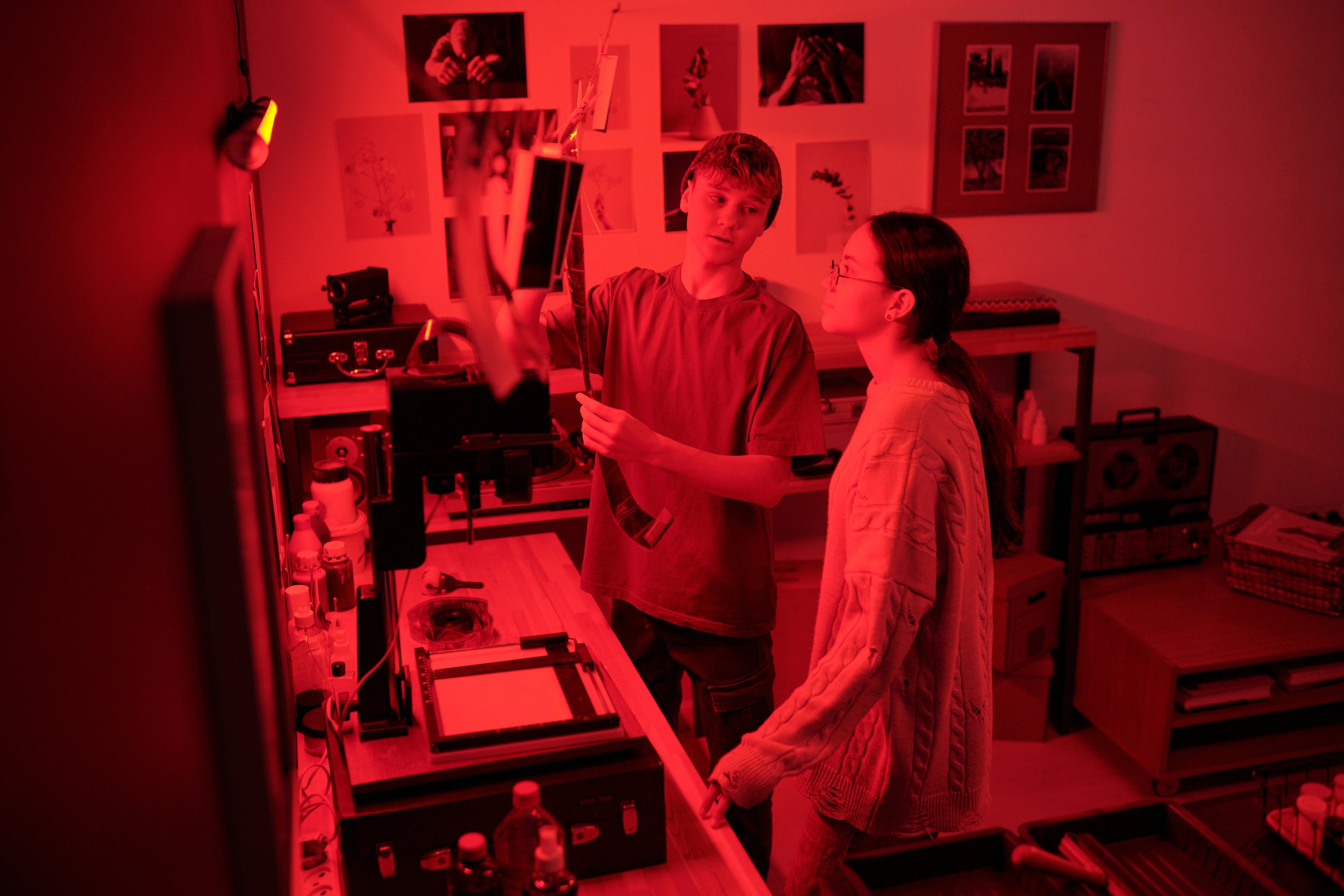
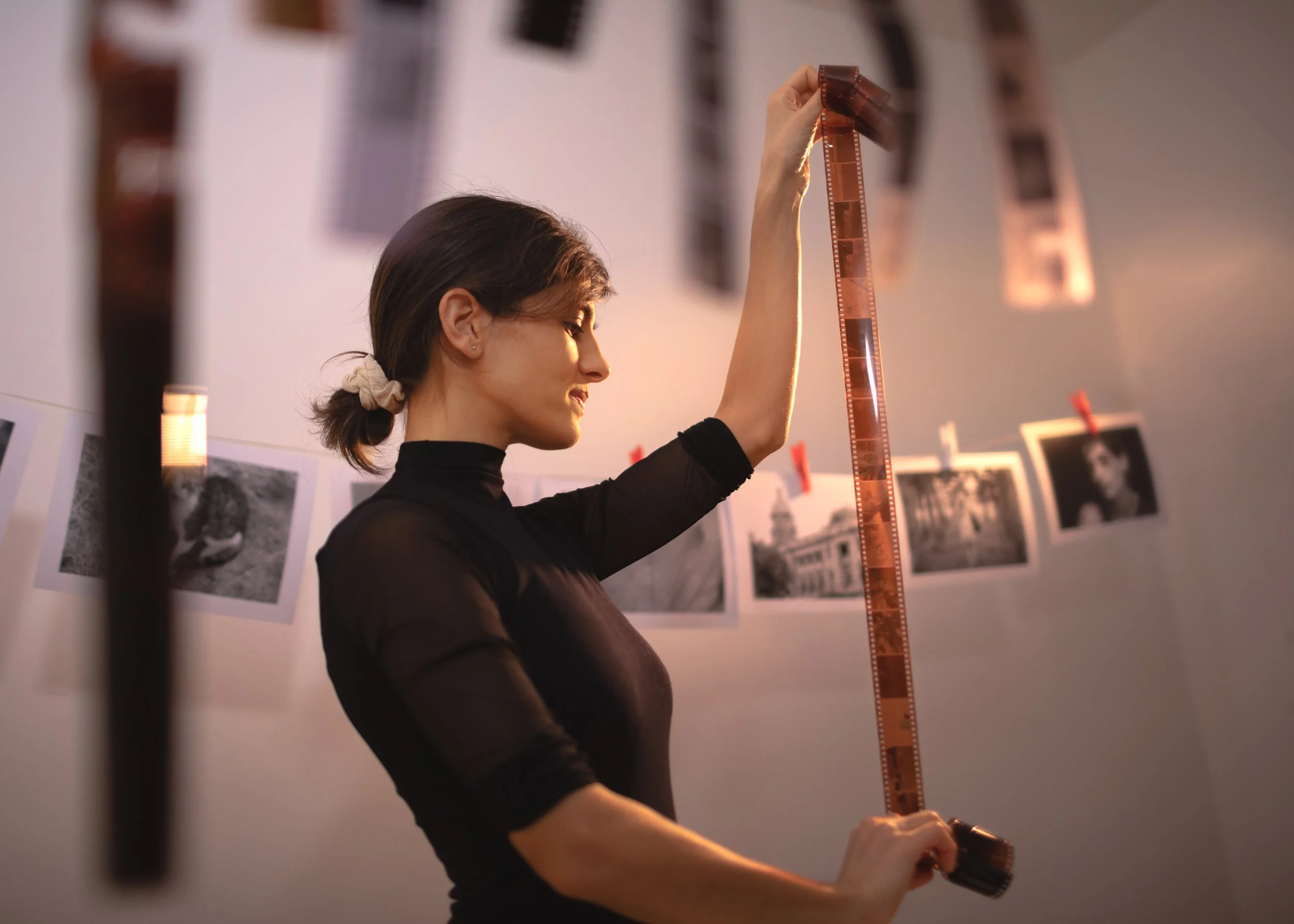
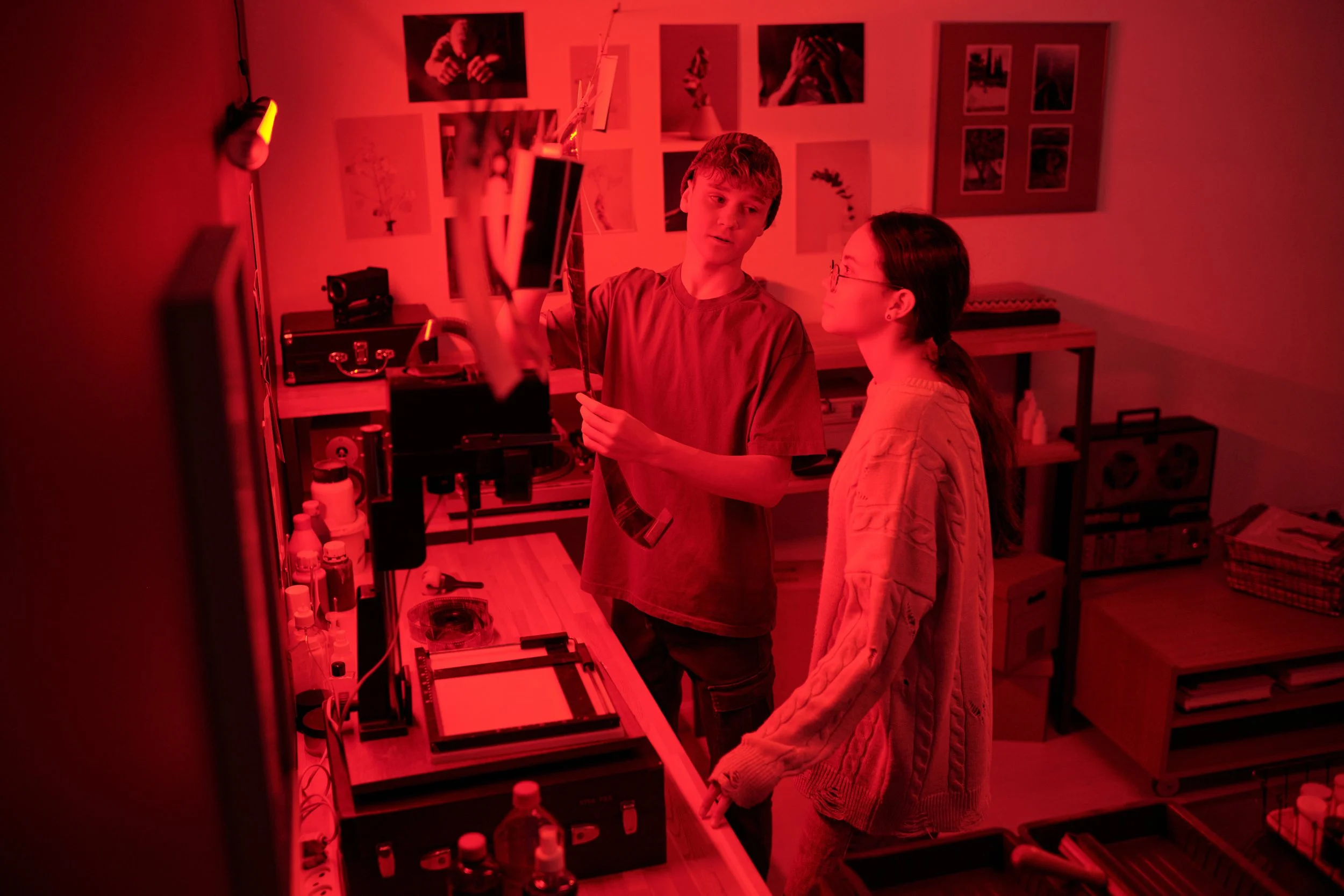
Analogue Photography & Darkroom Practice: Mastery of medium and 35mm format film cameras, advanced black and white processing, experimental techniques, and fine art silver gelatin printing in our dedicated darkroom.
Digital Photography: Advanced digital camera techniques, complex exposure control, and creative problem-solving.
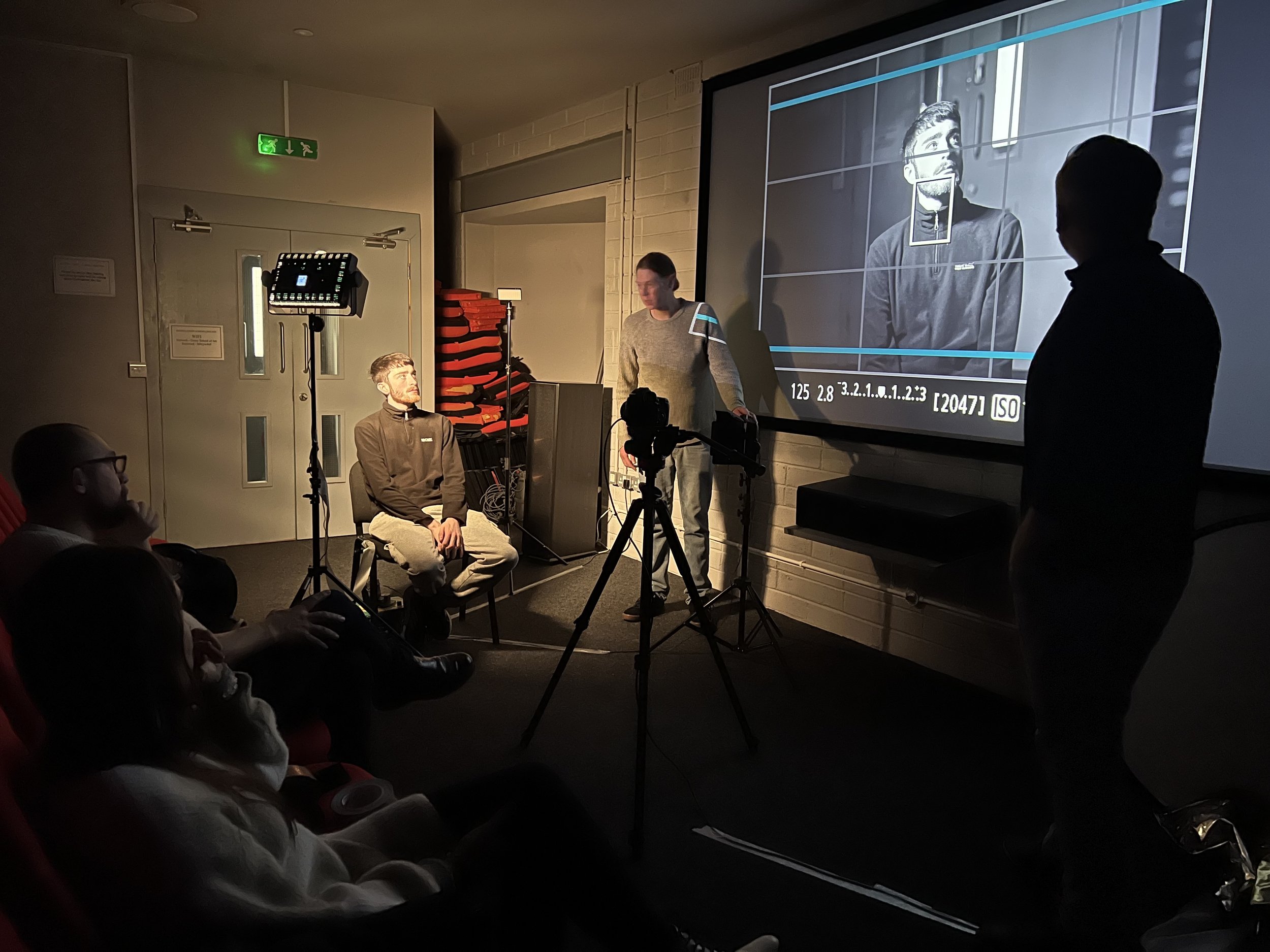
Studio Photography: Mastering artificial lighting, portraiture, and commercial studio practices, integrating both digital and film capture.
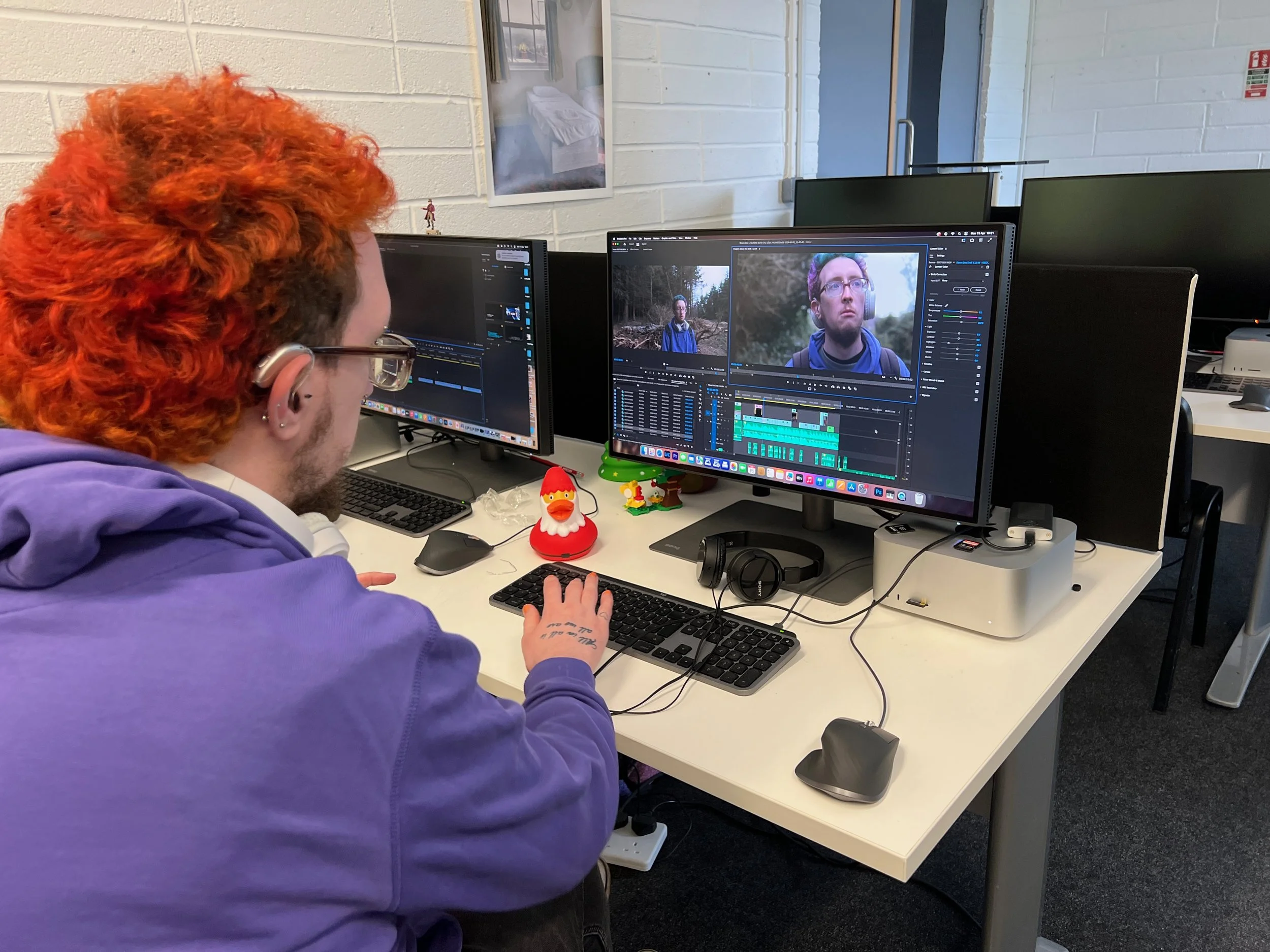
Digital Imaging: Advanced post-production workflows, high-end retouching, and preparing digital files alongside darkroom scans for exhibition.
History of Photography: Understanding the evolution of the medium, the historical significance of the darkroom, and its impact on contemporary visual culture.
Portfolio / Collection of Work: Curating and presenting a cohesive body of work, including high-quality darkroom prints, for professional or academic progression.
Personal and Professional Development: Preparing for freelance practice, copyright law, and the business of photography.
-
Digital Photography (6N3589)
Portrait Photography (6N3694)
Communications (6N1950)
Personal & Professional Development (6N1949)
Fine Art Photography (6N3449)
Creative Darkroom Techniques (6N3725)
The Art of Colour Photography (6N3731)
Documentary Production (6N18514) (Elective)
The History of Photography (6N3730) (Elective)
-
Graduates of this programme will be well-equipped to enter the creative industries in various roles, including:
Fine Art Analogue Photographer
Darkroom Technician / Master Printer
Freelance Photographer (Portraiture, Commercial, Event)
Studio Assistant / Lighting Technician
Photojournalist / Documentary Photographer
Retoucher / Digital Editor
Higher Education Progression: Upon successful completion, students can use their QQI Level 6 qualification and advanced portfolio (featuring specialised darkroom work) to apply for advanced entry (Year 2) to various Level 7 and Level 8 Degree programmes in Photography, Fine Art, Visual Communications, and Media across Higher Education Institutions in Ireland and the UK.
-
Applicants will be expected to attend an interview, where an informal assessment will take place to choose suitable candidates for the course. This course will require individuals who can work effectively and productively as part of a team.
Firstly the interviewers will be looking for applicants who have completed the leaving certificate or are over the age of 23. Successful applicants will have a mature attitude and will also be competent with computers, preferably Macs. Applicants should be passionate about the world around them. During the interview, each applicant will be asked to demonstrate their interest in lens based media i.e. TV, Film, Photography etc., with particular emphasis being placed on Photography. About 15% of this course focuses on writing, and presenting. As a result, the ideal applicant would have a good command of the english language.
-
It is expected that the learner availing of this programme will come from diverse social, economic and/or cultural backgrounds. The learner may have an existing vocationally specific skillset and seek reskilling/upskilling in order to reenter the workforce. The learner may have previously achieved certification at NFQ level 5. However if the learner has not achieved a previous formal qualification, it is expected that s/he will be able to demonstrate the levels of knowledge, skill and competence associated with the NFQ level 5 when accessing this programme.
The learner will be self motivated and have the ability to apply theoretical concepts within his/her chosen field of learning. It is expected that s/he will have a range of learning styles, strengths and needs related to the programme.
The learner will have expressed an interest in working in a supervisory capacity in their chosen vocational area and will have the capacity to work autonomously, take responsibility for the work of others in the workplace and assist others in identifying learning needs.
In order for the learner to have a realistic chance of achieving the standard of a level 6 award, it is expected that the learner should be able to:
Fluently read, draft, prepare and understand complex information that is personally relevant and reflects a broad knowledge base, for example, text and other information relating to abstract theoretical ideas, concerns or procedures
Fluently read, draft, prepare and understand complex quantitative information
Assume full responsibility for consistency of self understanding and behaviour
Solve problems, independently and as part of a range of different groups
Demonstrate the use of a broad range of specialised skills and tools
Act with substantial responsibility and autonomy
Attend timetabled classes for the duration of the programme
Complete self directed hours of learning in the form of practice time, preparation, study time and reflection time, as appropriate
Participate in all programme related activities
Participate in work experience, as appropriate